Cholera outbreak in the POW camp
The Narrow Road to the Deep NorthThe cholera outbreak in the POW camp made the railway’s system of forced labour a contest not only over work but over who could be isolated, treated, or counted as fit to continue. As cases multiplied, Dorrigo Evans served as both senior medical officer and commanding officer, trying to care for prisoners while negotiating with Major Nakamura over the labour force the Japanese demanded. The epidemic exposed the inadequacy of the camp’s medical provision and made each head count a decision with consequences for the sick and the dying.
Conditions and outbreak
The outbreak took hold amid worsening conditions on the railway. As the monsoon arrived, food became scarcer, rest days disappeared, quotas rose, and shifts lengthened. The Speedo further blurred the already unstable boundary between the fit and the sick: prisoners were increasingly ordered to work two shifts, by day and night. The men laboured with basic tools and their own bodies, while hunger, illness, and exhaustion depleted the camp.
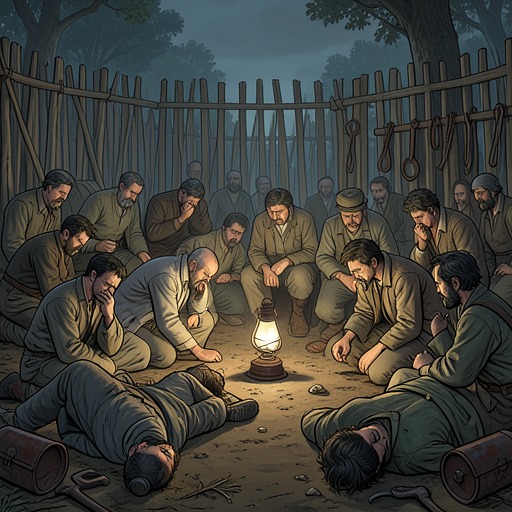
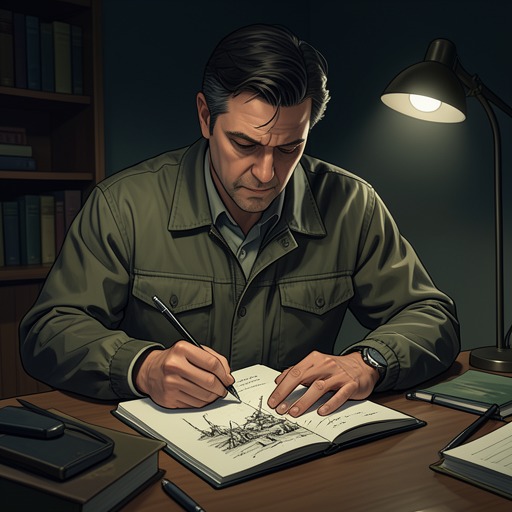
Nine days before the episode in which Rabbit Hendricks became gravely ill, cholera had broken out. The prisoners had come to fear the disease more than their Japanese captors. While finishing a shift on the Line, Rabbit suffered an abrupt, severe illness. Chum Fahey saw what had happened, and Rabbit was carried back to camp on an improvised stretcher by Chum, Darky Gardiner, and two others. The journey followed the Dolly, the three-and-a-half-mile jungle track between the Line and camp. In the darkness they searched for Rabbit’s lost dentures and eventually reached camp shortly before midnight. Rabbit, along with his watercolour set, sketchbook, and concealed drawings of camp life, was taken into the cholera compound; few sent there returned.
Isolation and care
Dorrigo’s rounds took him between the general hospital and the cholera compound, a group of open-sided shelters where infected prisoners were isolated and most died. He understood isolation as protection for the rest of the camp as well as care for those already ill, but could not make that distinction reassuring: in practice, the compound was a place of exceptionally high mortality. He continued working despite his own exhaustion and uncertainty, relying on the actions required of him rather than confidence that medical intervention could control events.
The work also depended on volunteers. Bonox Baker served as an orderly in the cholera compound and told Dorrigo that two other orderlies had contracted the disease. Dorrigo accepted the danger of entering the compound as part of his medical duty, yet did not understand why men who could have avoided the assignment chose to take it on. Their service kept care going while exposing them to the same outbreak they were trying to manage.
During one round, Dorrigo examined forty-eight other men on a bamboo platform. He pronounced several dead and identified Ray Hale as sufficiently recovered to leave that night and begin light duties the next day. In the same group, a boy who appeared close to death responded when Dorrigo examined him, insisting that he was not ready to die. The contrast between these cases shows the work’s narrow, uncertain decisions: a patient might be released to limited work, while another could appear beyond help and still respond.
The labour count
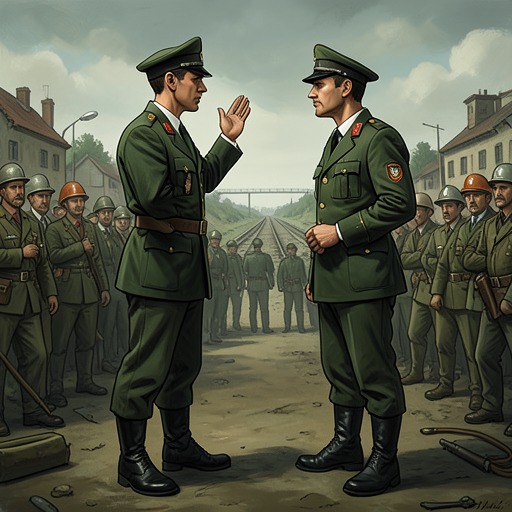
The epidemic shaped negotiations over the number of prisoners available for railway work. In a roll call overseen by Lieutenant Fukuhara, Dorrigo reported that six men had died since the previous day and that 838 POWs remained. His accounting included 67 men with cholera in the compound, 179 in hospital with severe illness, 167 too unwell for more than light duties, and 62 more reporting sick that morning. He calculated that 363 could be sent to the railway.
Major Nakamura rejected the limit and pressed for a larger workforce. After further argument, Dorrigo offered 400, using his medical knowledge to distinguish among the sick. He knew, however, that medical categories offered little protection against demands imposed by the railway. When Nakamura struck him during the dispute, Dorrigo kept recalculating: in his judgment, no prisoner was truly fit for the work expected of him, though a smaller number might survive light duties and others might be moved into work parties. He estimated that 406 was the maximum he could assemble and believed even that would not satisfy Nakamura. The scene makes the outbreak part of a larger system of coercion: illness did not remove prisoners from the labour calculation but intensified the pressure to sort them into categories the camp could exploit.
Consequences and significance
The outbreak’s consequences extended beyond the men isolated in the compound. It burdened the people caring for them, weakened the labour force, and forced Dorrigo to balance individual medical judgments against the Japanese demand for railway workers. The accounting could not make the prisoners healthy; it only determined which sick men would be exposed to further work. Rabbit’s removal to isolation and the loss of his hidden drawings also show how the disease interrupted the fragile acts of exchange and record-making through which prisoners sustained themselves and preserved evidence of camp life.
The episode presents medical care under conditions where neither recovery nor fair treatment could be assured. Dorrigo’s rounds, the orderlies’ volunteer service, and his resistance during the head count all occur within a camp that controls movement, labour, and access to care. The outbreak is therefore more than a medical emergency: it reveals how the railway’s demands continued to govern prisoners even when illness had left many of them unable to work.